19 JAN 2023
Poe's Work in the Cinema of Roger Corman
By Casandra Vicario
On January 19, 1809, one of the most important writers of detective and horror literature was born in Boston: Edgar Allan Poe, some of his stories were adapted for the screen by Mtro. Roger Corman—a milestone moment for horror cinema and literature.
The film adaptations of the stories of Poe in the films of Roger Corman are considered part of what is known as Gothic horror cinema, a literary period to which Poe did not formally belong, although its atmospheres and film adaptations do, as we will see below.
It is in the 18th century that Gothic literature emerges, with the following characteristics: the otherworldly blends with the world of the living, events do not unfold in chronological order, there are no purely good or purely evil characters (the characters move back and forth), most of the stories take place in a castle, and the ending is melancholic and leaves you with questions.
The first novel considered part of this period is “The Castle of Otranto” by Horace Warpole, and it very clearly establishes the pattern for future Gothic novels: a setting (a castle), a villain, a damsel in distress, and a hero who confronts evil or the supernatural.
Gothic cinema has its roots in silent film, with movies such as “The Cabinet of Dr. Caligari” (1920), “Nosferatu” (1922) or “The Phantom of the Opera” (1925).
And in the sound-film era, Universal Films was responsible for giving us Gothic films such as: “Dracula” by Tod Browning, 1931, “Frankenstein” by James Whale, 1931, and “Bride of Frankenstein,” 1935, among others.
Later came Hammer Films. This important production company's key period begins in 1957 with “The Curse of Frankenstein” by Terrence Fisher, and ends in 1976 with a film by Peter Sykes titled “La Monja Poseída.”
Now we come to the era this text is about: the period of American Gothic, characterized by films based on the stories of Edgar Allan Poe, directed for the most part by Roger Corman, starring the master of horror Vincent Price, and adapted by Richard Matheson (no less).
The films of this period known as American Gothic are: “House of Usher” (1960), “The Pit and the Pendulum” (1961), “Premature Burial” (1962), “Tales of Terror,” which includes adaptations of Poe's stories Morella, The Black Cat, The Cask of Amontillado, and The Facts in the Case of M. Valdemar (1962).
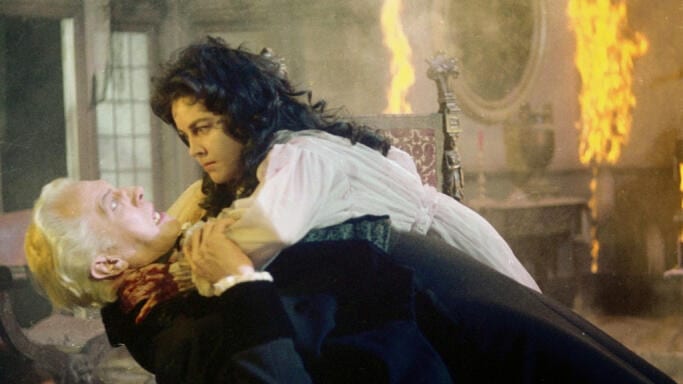
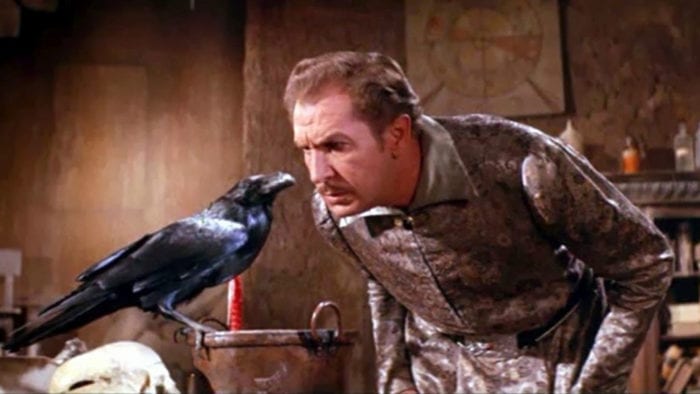
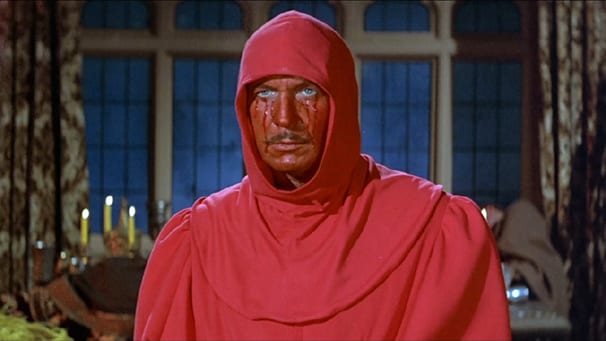
The following also belong to this period: “The Raven” (1963), “The Masque of the Red Death” (1964), “The Tomb of Ligeia” (1965), and “The Oblong Box” in 1969.
Corman's films based on Poe are highly Gothic, both in structure and atmosphere; many of them take place in old castles or dungeons, and they display the classic structure of the Gothic tale: a castle where the action unfolds, a damsel in distress, a hero who tries to save her, and a villain who goes from victim to victimizer.
All this is seasoned with a ghost, a premature burial, and the occasional walled-up corpse.
Although Roger Corman's films are not based to the letter on the works of Poe, they do borrow some of his elements. In “The Pit and the Pendulum”, for example, the story is narrated in the first person by a man condemned to death, who shares with us his feelings of insecurity, the peace that dying will finally bring him, and the hope offered by death amid the agonizing torture.
Corman's screen adaptation also shows us the relatives of the inquisitors, as well as the events that take place at the very spot where, years earlier, the character died—from the tale of Poe.
This is the reason the texts of Poe were not faithfully adapted in Corman's films: the length of the stories, which run between 15 and 20 pages each, or even less. Because of this, turning them into feature films truly required a great deal of work from the story's adaptor: Richard Matheson.
The combination of Poe, Corman, Price, and Matheson undoubtedly produced a truly MACABRO period in horror cinema, one in which each member of the team contributed their talent to create true cinematic gems.