13 FEB 2017
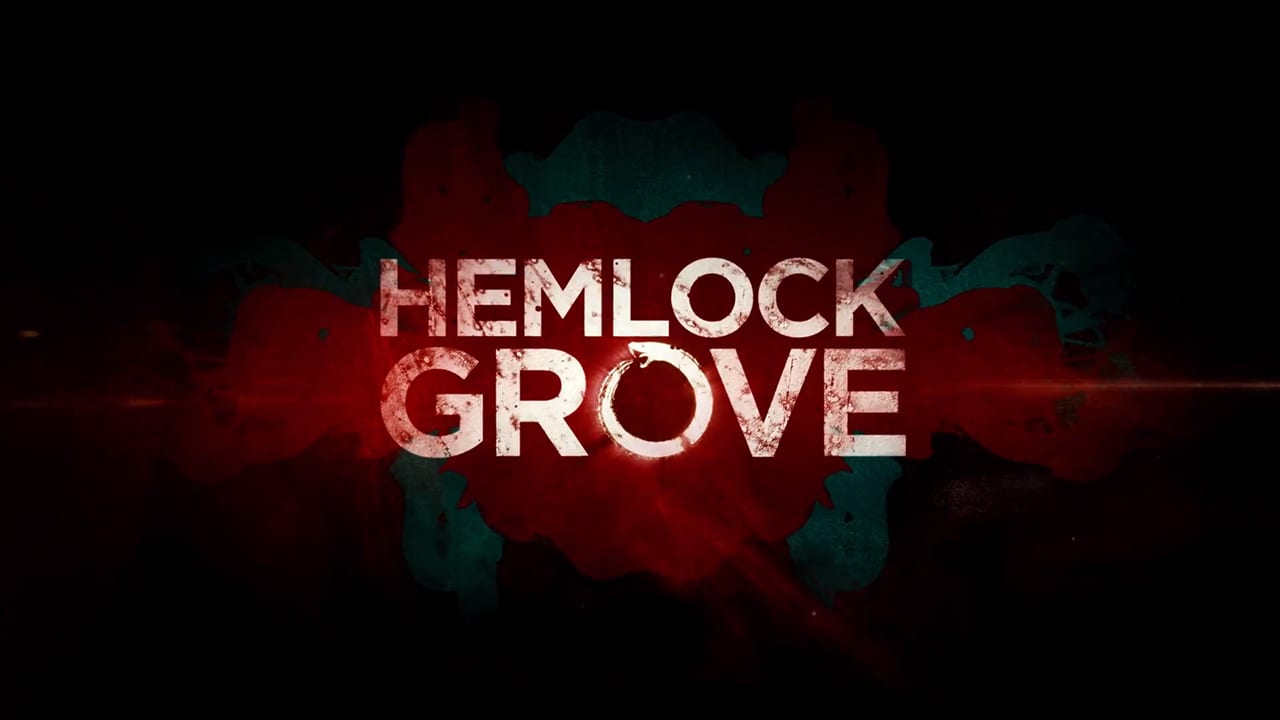
Failed Ouroboros: Hemlock Grove
By: Diego Vilchis @Silens_Aeternum
Spoiler warning.
The brutal murder of a young woman coincides with the arrival of a Gypsy family in the American town of Hemlock Grove. The peace is shattered, and suspicion falls on Peter and Lynda Rumancek. They soon find themselves entangled with the Godfreys — the wealthy, influential family — and the mysteries surrounding them: their pharmaceutical company and the rumors of sinister experiments, the unstable relationship between Olivia and her children, Roman and Shelley — whose birth and physical appearance are shrouded in secrecy — and the connection between the two families, who appear to be strangers to one another. The town's already-fractured routine is disturbed even further when a second murder occurs.
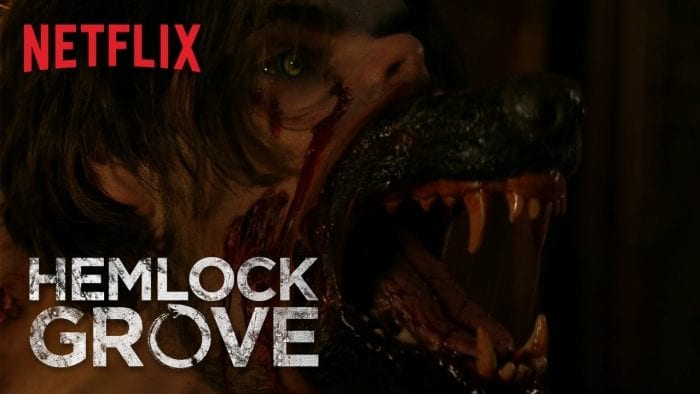
This is the premise behind Hemlock Grove, an original Netflix series that premiered in 2013, created by Brian Mc Greevy, who also wrote the novel of the same name on which it is based. Produced by Eli Roth and starring Landon Liboiron (Peter), Bill Skarsgård (Roman; the future Pennywise), and Famke Janssen (Olivia), the story weaves together several elements that complement each other, at least during the first season: glimpses of the esoteric in the form of premonitions and symbols, superficial nods to Gypsy folklore, subtle vampirism and visceral lycanthropy, science fiction, among other things. The first thing to catch your attention may well be the name of the director of Hostel on this production rather than the cast, which a couple of years earlier might have gone somewhat unnoticed – except for Janssen, whom we already know from several films.
The series is a combination of thriller and horror, seasoned with certain moments of gore, and during the first few episodes the development of the story, as well as of its characters, is enigmatic: Peter is standoffish at times, though that owes more to his nomadic nature; Roman, the son who is sidelined in a kind of incomprehension and melancholy, begins to show the characteristic ravages of his lineage without knowing it; Olivia, his mother, is that femme fatale who seeks personal gain at everyone's expense, even her own family; Shelley (of course, a nod to Mary), Roman's sister, is the unsettling, mysterious figure because of both her physical appearance and her muteness; Dr. Johan Pryce, who runs the Godfrey Laboratories, displays a personality utterly devoid of emotion — except toward Shelley — in keeping with the abnormal experiments he conducts.
Other characters emerge over the course of the series: Letha, Roman's cousin, whose importance becomes clear at the end of the first part of the story; Dr. Norman Godfrey, Letha's father, who develops an ambivalent relationship with Olivia; and Destiny Rumancek, Peter's cousin, a prostitute and sorceress.
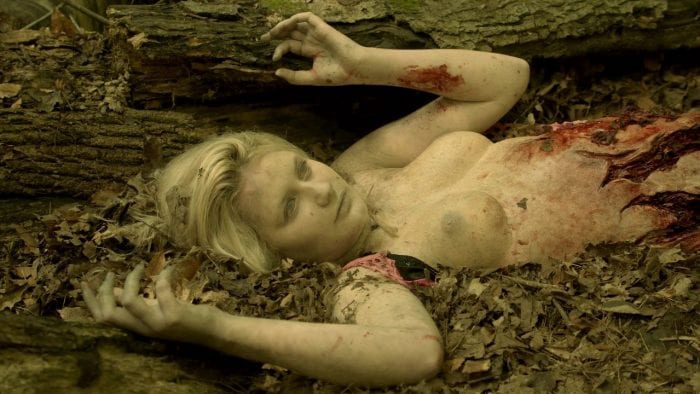
All of them become intertwined over the course of the first season under the premise that something is destined to happen: from the moment Roman and Peter meet, they maintain a close but cautious relationship, driven in part by the enigma of the murders as well as the visions both of them experience in their dreams. Part of this mix stems from their inhuman nature: Roman doesn't know that his bloodline feeds on blood, but he knows he's capable of exerting influence over people's will; Peter transforms during the full moon, leaving behind a trail of flesh and blood from his human form as he takes on that of the wolf (absolutely nothing like Twilight, in case you were wondering). Likewise, they share a mutual interest in Letha.
All of this, to my mind, largely accounts for the strengths of the first season, and of the series as a whole: the iconic elements of certain horror-story monsters blended together, the seemingly unresolved union between the esoteric and science fiction, the visceral quality, the relationship between the main characters, and the premise that they're caught up in something deeper. It may well seem like a certain cliché of American films: the reuse of certain horror-movie stereotypes, all set in a town adrift; one element they failed to make the most of, oddly enough, was the Gypsy folklore, which is only referenced through the characters but never actually explored; still, the thriller works, perhaps predictably for some, even by the end of the first season. But the mystery surrounding certain situations and characters strengthens the narrative. This may have something to do with the fact that the entirety of the book's story was used as the basis for the first thirteen episodes. Even during the second season, you can see the attempt to resolve and explain the loose ends, mainly those relating to Johan Pryce and his experiments, which is the most interesting and worthwhile part, given that they're tied to Peter and Roman's visions. The final episode somehow signals the series' decline.
The third season becomes untenable, and several characters turn out not only forced but completely useless, especially those surrounding Olivia Godfrey: a private detective she herself hires, who in her mind ends up becoming an African god; a lost daughter appears out of nowhere, and vanishes just as quickly. Olivia herself is diminished in terms of her character's potential. The story loses steam the closer it gets to the end: the resolution between Peter and Norman is weak, not to say pathetic; Shelley loses her almost preternatural aura once she starts talking; the immutable figure of Dr. Pryce disappears along with the purpose of his experiments; even the special effects come off as a joke, poorly executed compared to the first season.
The overall result is bittersweet: one of the first horror series under Netflix's wing, whose track record of original productions had maintained a respectable standard of content and originality, ultimately fails to come together, and what promised to be a series whose premise would prove entertaining should have ended where Mc Greevy's book ends: thirteen episodes would have been more than enough.