8 MAR 2022
And in the beginning was…Carmilla, 150 years since the publication of the great vampire woman.
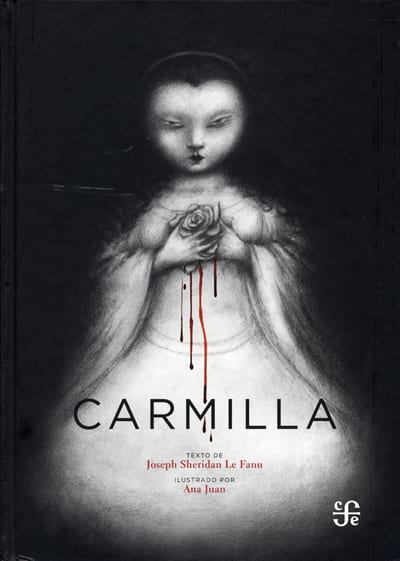
By: Casandra Vicario. Illustrations by Ana Juan, Fondo de Cultura Económica.
In 1858, Irish writer Joseph Sheridan Le Fanu loses his wife, isolates himself at home, and begins writing nothing but horror stories from his bed; his antisocial behavior earns him the nickname “the invisible recluse”.
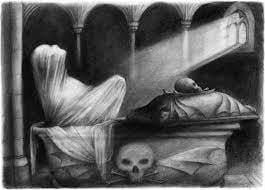
“Carmilla” is one of those stories born of a tragic event that brought immortality to its creator. This vampiric tale was published in installments in the magazine “Dark Blue Magazine” in 1871, and in 1872, “In a Glass Darkly” appeared — a compendium of all of Le Fanu's horrific works written up to that point, in which this sensual story of a bloodsucking woman appears once again to stalk us in our own bedroom.
Although there are other vampire stories in literature before “Carmilla” such as “The Bride of Corinth” by Goethe (1797), “The Dead Woman in Love” by Théophile Gautier (1836), or the tales of Edgar Allan Poe: “Berenice” (1835), “Morella” (1835), and “Ligeia” (1838), it was Joseph Sheridan Le Fanu's text that Bram Stoker himself chose as a source of inspiration for “Dracula.”
Laura is a young woman who lives with her father in Styria, Austria. One day, a terrible carriage accident occurs, and they take Carmilla in; although she doesn't leave her room until after noon, doesn't eat, and shuts herself away all day, Carmilla strikes up a very close friendship with the girl of the house.
“Carmilla” is one of its author's most sensual novels, and it lays out many of the rules governing how female vampires move through the world of the living: she is young, seductive, intelligent, highly sexual, lesbian, possessed of superior physical strength, able to take the form of an animal (in this case, a cat), feeds on blood, has complete freedom over her own actions, and needs no male figure.
The narrative also features a figure seeking to end the monster's existence — in this case, Baron Vonderburg.
This is a text starring two women; in the Victorian era, presenting a free and independent female character in literature — even one who happens to be a vampire — was a controversial act, which is why she is given the nature of a monster.
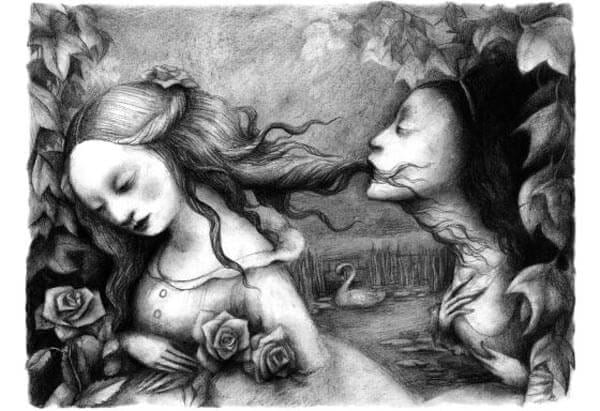
In addition to everything mentioned above, there are other elements that make Carmilla a unique text: the vampire woman is bound to her name, and even when she doesn't use it literally, she must create one using all the letters of the original alias.
According to Noelia Induraín and Antonio José Navarro in their book “Vampiros. El Mito de los No Muertos,” it is in this text that we find an element rarely seen in stories about bloodsucking creatures: “the amulet against the vampire,” which a hunchback sells to the protagonist, assuring her that “it never fails”… Or does it?
The events that take place in “Carmilla” have been adapted for film on numerous occasions — let's mention a few: In 1932, Carl Theodor Dreyer directed “Vampyr”, “Blood and Roses” in 1960, by Roger Vadim; the Italian film “The Spanish Maldition of the Karnsteins” from 1964, directed by Camillo Mastrocinque (abre en nueva pestaña), “The Blood Spattered Bride” from 1972 by director Vicente Arana, “Alucarda” by the great Juan López Moctezuma, and of course, the trilogy on the subject made by the great English production company Hammer Films, made up of the magnificent films “Vampire Lovers” in 1970, directed by Roy Ward Baker, “Lust for a Vampire” in 1971 by Jimmy Sangster, and in 1972 it would be the turn of “Twins of Evil” by John Hough.
From her appearance on the pages of a book in 1872 to the present day, “Carmilla” remains the favorite vampire, portrayed in film, theater, video games, and music. There are countless different editions of Le Fanu's text — facts that owe nothing to luck or religion, but rather, as Carmilla says, “I believe there is no creator, and that all things happen by the imperative of nature.”
Sources:
– Vampire Encyclopedia. Matthew Bunson. Random House. New York.
– Carmilla. Joseph Sheridan Le Fanu. Fontamara.
– Vampiros el mito de los no muertos. Noelia Induraín and Antonio José Navarro. Ed. Tikal. Spain.