29 OCT 2015
CINEMA IN THE COUNTRY THAT CELEBRATES THE DEAD…
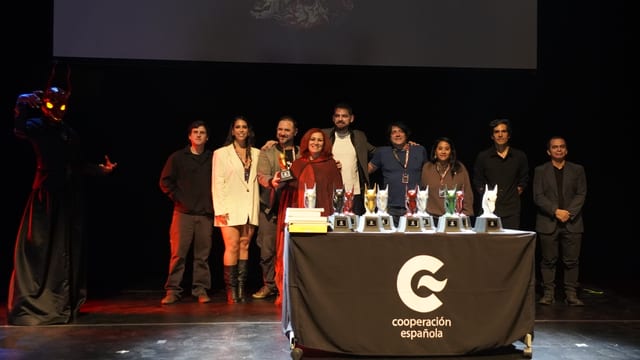
On the occasion of these days when many of us feel inclined to take an audiovisual inventory, mainly of horror cinema, we asked our dear Arturo Castelán (filmmaker, director of the Festival Mix de Diversidad Sexual en Cine y Video, and co-founder of this festival, Macabro) — based on a series of images posted on his Facebook profile — to write us a piece with cinematic recommendations for Day of the Dead. Here's the result.
In the country that celebrates the dead, relatively few films give voice to the deceased and their unstoppable thirst to keep telling stories, seducing, and hypnotizing the living with their scents of incense, cempasúchil, and bread.
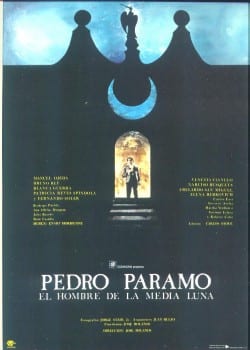
PEDRO PÁRAMO is perhaps the greatest Mexican novel, because its author, Juan Rulfo, broke free from the realist corset of our literature to make us hear the murmurs of a ghost town in the provinces and its inhabitants, specters thirsty for sex and power. National cinema has approached this work with too much reverence, but Carlos Velo's version stands out for Gabriel Figueroa's phantasmagoric cinematography and its performances (American actor John Gavin, an unleashed Pilar Pellicer, a superb Jorge Rivero). José Bolaños's version of this novel, EL HOMBRE DE LA MEDIA LUNA, is in color and has the curious distinction of an original soundtrack by Ennio Morricone, a composer as pop as he is full of dark surprises like this one. And let's not stray far from Rulfo's shadow to also recommend the timeless ectoplasms — though '90s in aesthetic — of filmmaker Roberto Rochín, who in PURGATORIO exhumes some unpublished writings by this magical author, now adding twisted urban legends to his glory.
On the other hand, now in the heart of the city, EL ESQUELETO DE LA SEÑORA MORALES lives unburied and punished by her husband, a good man devoted to taxidermy who is driven by his wife — a beautiful woman scandalously lavish in humiliating her spouse — to take desperate, deranged, and cruel measures to keep their marriage afloat... in a perverse and unconventional way. In the hands of its director, Rogelio González, this tale — one Poe himself could well have written — has become the best black-comedy made in Mexico, with extreme performances by Amparo Rivelles and Arturo de Córdova, giving one of the many variations on the mad-scientist character.
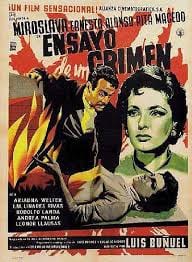
Through a character based on a Mexican serial killer from the fifties, the master of surrealism Luis Buñuel, in ENSAYO DE UN CRIMEN, takes on another body — now a mannequin — which he drags, dismembers, and burns, while his main character becomes obsessed with the woman he has taken as his model, who spends her time toying with him. The fact that this woman is Miroslava Stern (a stunningly beautiful European actress from a popular potboiler called "La muerte enamorada" and a symbol of suicide in our cinema) adds something more than macabre to this black comedy.
Buñuel once again does what he can within the Mexican rural setting to bring us a tale of resentment that breaks through the barriers of the beyond — Emily Brontë's novel "Wuthering Heights," here rechristened ABISMOS DE PASIÓN — where its fantastic necrophilic ending transcends a film that is otherwise distant and stiff as death.
There are more failed films where the dead communicate and utter a couple of lines that drive the living mad. Two examples: LA LLORONA by Chano Urueta, which they just haven't managed to get right even in animated form, and HASTA EL VIENTO TIENE MIEDO (Taboada), which has been filmed twice to tell a story of vengeance between women that, in its latest version (Gustavo Moheno), is taken all the way into lesbianism.
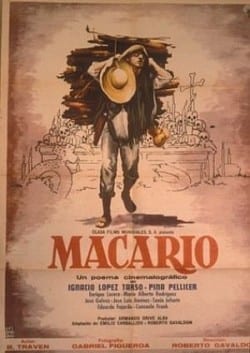
But the jewel of the group is MACARIO by Roberto Gavaldón, a film based on B. Traven, where the viceregal Mexican imagery of death — embroidered around the idea of sin and need — achieves a film poetry so resounding that it fascinated Ingmar Bergman himself.
By: Arturo Castelán
Images: Internet