16 NOV 2015
Macabro Monday: Why Texas Chainsaw Massacre Is a Classic
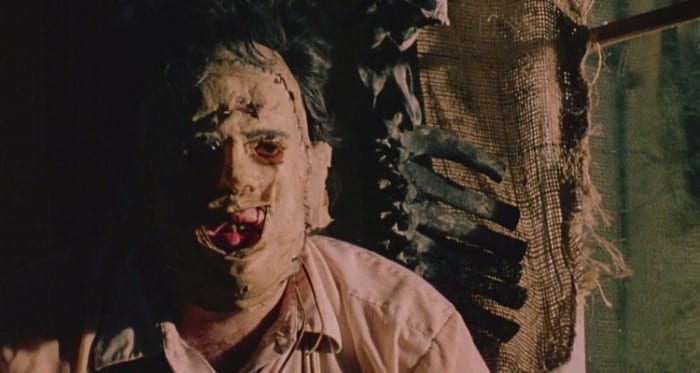
Starting this week, we'll be sharing a column by our friend Chuck Pereda. Below is a reproduction of the text originally published on www.elsalvavidas.mx (abre en nueva pestaña)on Monday, November 9, on the occasion of the recent death of Gunnar Hansen, known in the film world for having played the character of Leatherface.
Why Texas Chainsaw Massacre Is a Classic.
By Chuck Pereda for www.elsalvavidas.mx (abre en nueva pestaña)
This weekend brought us the surprising death of the original Leatherface: Gunnar Hansen. However, in this world of prequels, reboots, sequels, remakes, and utterly unnecessary reboots of remakes of sequels, people have forgotten how important this horror classic is (one of the first slasher films), even though it was just briefly back in theaters (and at a press screening at the Autocinema Coyote which in theory is awesome, but in practice you can't see a damn thing) in its remastered 40th-anniversary version.
Part of the issue is that there are 7 films in total, the first 4 more or less official sequels, of which only the second one holds up — which, relatively speaking, is similar in tone to The Devil’s Rejects in that vein where you end up rooting for the villains because the good guys (in this case, it's Dennis Hopper) are crazier and even more cruel than they are. The other issue is that the remakes, while quite successful, aren't very good.
Still, using the sad passing of Hansen as an excuse, it's worth revisiting why this film by Tobe Hooper is so badass and important:
- The character Leatherface is based on Edward Theodore Gein a.k.a. Ed Gein, one of the most famous serial killers in the United States who also served as inspiration for Psycho (both the book and the film). In fact, Leatherface's grandmother's corpse is also preserved in a rocking chair, just like the mother of Norman Bates.
- The opening scenes set the tone for the whole film. The Texas Chainsaw Massacre opens with a strange sculpture made of corpses in the local cemetery, and that infamous radio newscast makes you assume from the very start that what's about to happen is real, and then, BAM, you're hit with a rollercoaster of madness.
- That's perhaps the film's greatest achievement: subverting everyday logic — the chicken kept in a tiny birdcage, the grandfather who's alive despite looking like a mummy, the furniture made of bones. Reality inside the Sawyer family's house is hellish, and that's what puts us on edge.
- However, for a film that ended up censored in parts of North America, it has very little gore, in fact, you could say it's relatively tame compared to all its sequels (the first death happens 30 minutes into the movie), but that's where its charm lies: it gives the impression of being far more violent than it actually is, and that's because it shows you the result of violence rather than the violence itself — you see a body convulsing rather than some rock-bottom-budget special effects, which is usually what makes '70s movies age badly.
- But what ties it all together is the soundtrack which is lost*, a masterpiece of musique concrète, and it's the reason the film feels so terribly disturbing. It's the creation of Tobe Hooper together with sound engineer William Bell and it's a mix of African instruments, forks scraping across tables, and chickens (in one of the film's most horrifying scenes), but you also hear a newscast on the radio and some traditional Texan songs, which gives it this feeling of a documentary because, as in the films of Dogma, the music only plays when the radio is on, and the rest of the time the sounds aren't musical.
Anyway, let's celebrate one of the greatest characters in horror cinema, a worthy companion to Pinhead, Freddy, Jason, Michael Mayer and Donald Trump.
*Neither Hooper nor Bell know where it is, and the only existing recording is mono and mixed in with the dialogue. Some fans have made homemade edits of the OST like the video below (there are also hundreds of blogspots with fan edits,) but out there somewhere is a pirated version (abre en nueva pestaña) that's basically a transfer of the audio from the entire film off VHS onto cassette.
https://www.youtube.com/watch?v=3odOfyPz8L8 (abre en nueva pestaña)