7 APR 2017
Histeria, or Everyday Horror
By Pablo Rendón (@pagusrendon)
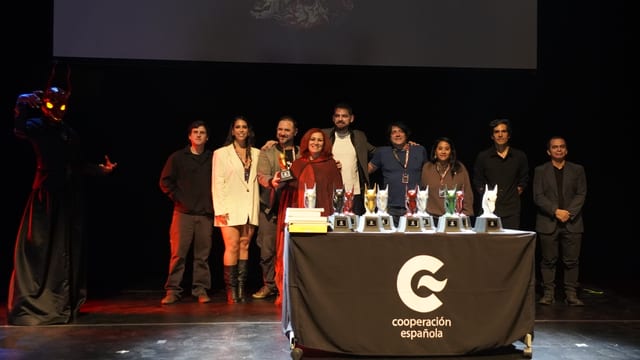
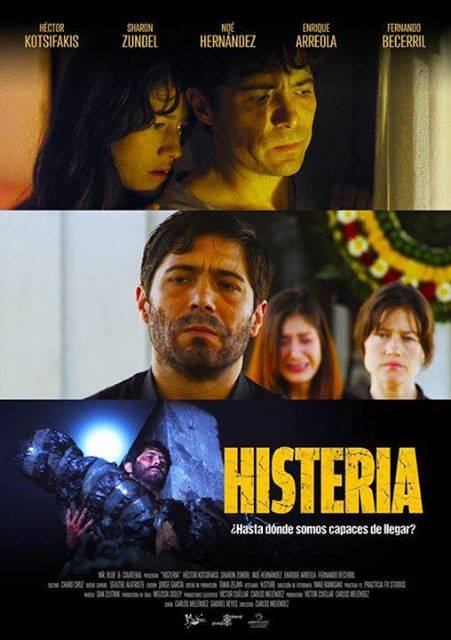
“My heroes are losers because they are defeated in advance, which constitutes one of the primary elements of true tragedy,” declared Sam Peckinpah on the occasion of the release of his film La balada del desierto (1970). Mexican filmmaker Carlos Meléndez (Best Director, Macabro XV) seems to have taken this premise as the starting point for his most recent work, Histeria, a film that was part of the Selection at Macabro: International Horror Film Festival of Mexico City in its most recent edition.
Federico Anduaga works in architecture and is also a kind of punching bag of flesh and blood. Our protagonist's tribulations —which could have come straight out of a Raymond Carver story— will be compounded by a series of events that can only be attributed to his bad luck: a marriage he's not comfortable in, a new but unaffordable house, extremely annoying neighbors, a sick father, a child on the way, an embezzlement scandal at the construction company where he works, among other misfortunes. Over eighty minutes we will witness the martyrdom of a man whose patience is pushed to the limit —another nod to Peckinpah's work, Straw Dogs (1971)—, but how far will he be willing to endure it?
There's a line attributed to Alfred Hitchcock: “Imagine a man sitting on his favorite couch at home. Underneath it there's a bomb about to go off. He doesn't know it, but the audience does. That is suspense.” In Histeria what was long foreseen finally happens, the pressure-cooker effect: something snaps in Federico's head, and nothing is ever the same again. What happens after this point of no return is for the audience to discover on screen. And while Histeria is indeed a film of suspense, it is even more so a film of a genre that would need to be coined: everyday horror.
Everyday horror emerges in small doses amid traffic jams, protests, scandals, and other interludes in the daily hustle and bustle of Mexico City, and could well drive even the sanest, most civilized of men mad. Add to this the constant media bombardment that glorifies violence —murder as a constant work of art, an act that would disgust even Thomas De Quincey himself— to which we are exposed day in and day out. It even comes down to the fear that comes with the responsibility of being a family's breadwinner, simply because society has decreed it so.
We can find the seed of Histeria in After School (2014), a film Meléndez co-directed with Mauricio Mendoza, in which a young student, faced with the harassment brought on by adversity, decides to take control —or take up arms, depending on how you look at it— of his own life, whatever the cost. In Histeria, Meléndez relies on the pen of fellow Mexican filmmaker Gabriel Reyes to write the screenplay. It is well known —as demonstrated by the controversial, award-winning Heli (2013), co-written with Amat Escalante— that Reyes approaches the subject of violence in our country with a thoroughness bordering on the essayistic. This exercise in composition on film, four-handed, gives Meléndez's film an inherent darkness that makes it endearing.
It's inevitable that the viewer will identify with Federico Anduaga at some point in the film. Why? Because in a city as chaotic as Mexico City, horror doesn't knock on the door — it leans on the horn, cursing us out to get moving. Histeria features a first-rate cast, including standouts Héctor Kotsifakis, Sharon Zundel, Noé Hernández, and Fernando Becerril. After making the rounds at various festivals, it will finally be shown in theaters starting April 21, distributed by LATAM Pictures.