25 JAN 2017
#LetrasMacabras: Poe in Popular Culture, a Brief Overview.
By: Diego Vilchis
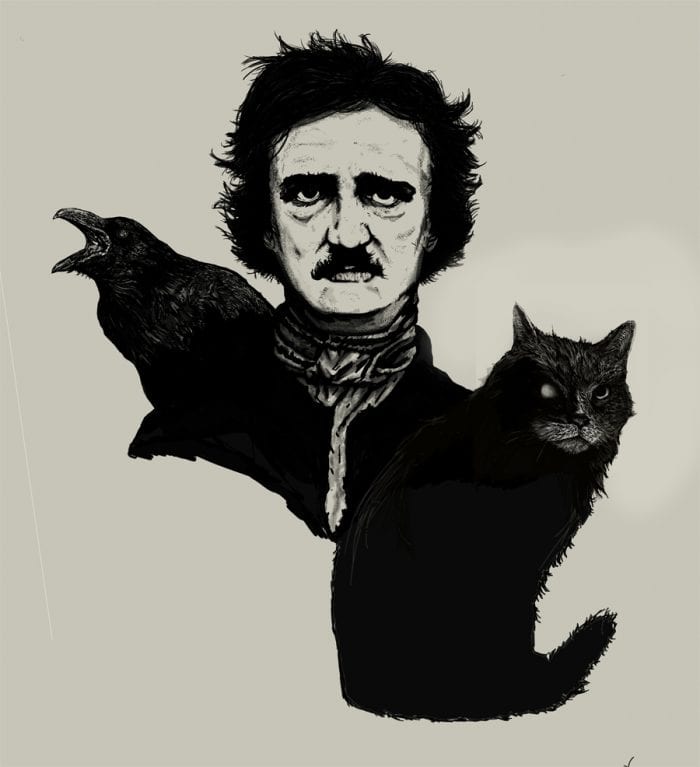
More than two hundred years after his birth, Edgar Allan Poe has become one of the most important figures in world literature.
Little can be said about his well-known biography and literary work that isn't already known: he was orphaned at the young age of two or three, was adopted by Francis and John Allan (from whom, as is well known, he took the name Allan), had conflicts with his stepfather and left that home, married his cousin Virginia Clemm — who was only thirteen years old at the time and died of tuberculosis at twenty-four — worked as a journalist, was addicted to alcohol, and in his final years suffered from delirium tremens that he developed as a result of his addiction, died in Baltimore under circumstances that remain mysterious, and his work was never recognized during his lifetime the way it is now.
We also know about his narrative versatility, which bore fruit in essays, literary criticism, poetry, and, of course, the short story. The latter, whose legacy remains under the name Narraciones extraordinarias, made it clear that Poe's mastery lay not only in his romantic style — nourished by the works of English and German Gothic literature — but also in his approach: an oppressive, claustrophobic atmosphere built from the violent and decadent abandonment of sanity, the loss of the muse, glimpses of the supernatural, the astonishing and the incomprehensible, all of it adorned with decrepit places and shadowy characters, perhaps as projections of a desolate, unknown inner world. We are talking, of course, about the ultimate expression of late Gothic literature in the United States.
Nor can we overlook his importance for later generations. We know that Howard Phillips Lovecraft counted him among his greatest influences, and that he would, of course, fuel the noir genre through stories such as The Murders in the Rue Morgue, The Purloined Letter, as well as The Narrative of Arthur Gordon Pym of Nantucket — stories that were hugely important in the creation of the now-famous Sherlock Holmes.
Poe's work endured in ways its author could never have witnessed. Today there are countless references that can be traced back to him, and I would like to take a brief look at the areas where he has left his mark
Literature
The Boston-born author had several detractors — Rufus Wilmot Griswold, the most notorious for his posthumous criticism — yet they could never diminish the greatness of his texts, which flourished in the minds of other writers such as Charles Baudelaire, Lovecraft and Conan Doyle themselves, Robert Louis Stevenson, as well as Jorge Luis Borges, Julio Cortázar, Horacio Quiroga, Bernardo Couto Castillo (whom we have already discussed here before), among other authors.
Music
There are many existing references to Poe in the musical lineage. There is, for example, the opera by American composer Dominick Argento, The Voyage of Edgar Allan Poe (1975–1976), as well as the choral symphony The Bells (1913), composed by the Russian Sergei Rachmaninov, whose lyrics are none other than those of the poem of the same name by the American writer.
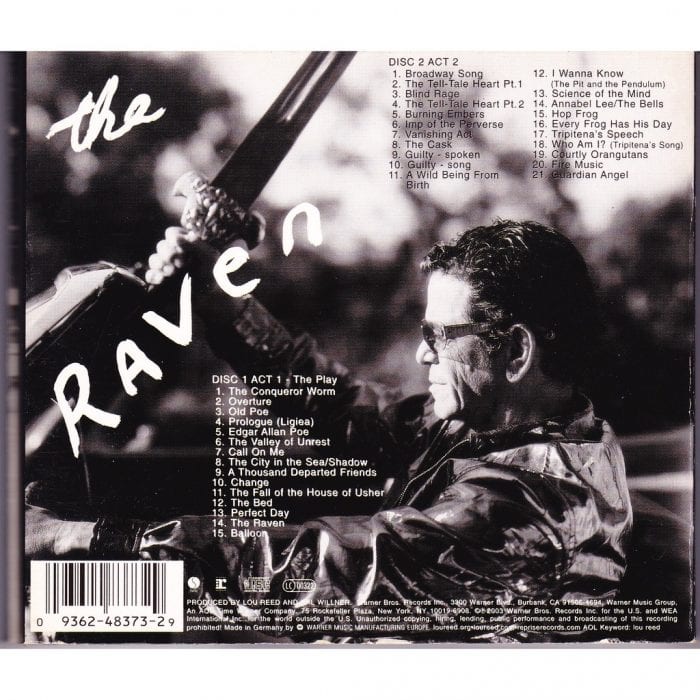
Queen wrote the song “Nevermore,” which appears on their album Queen 2 (1974), as did Iron Maiden with “Murders in the Rue Morgue” from their second album, Killers (1981); in 2003, Lou Reed released his concept album The Raven; The White Stripes drew on the story The Masque of the Red Death for their song “Red Death at 6:14,” just as Soda Stereo did for their song “Corazón delator,” based on the story of the same name, on the album Doble Vida (1988); in the underground and gothic scene, bands such as Siouxie and the Banshees and Sopor Aeternus, to name a few, show a marked influence from Edgar Allan Poe's literature in some of their songs.
Film and Television
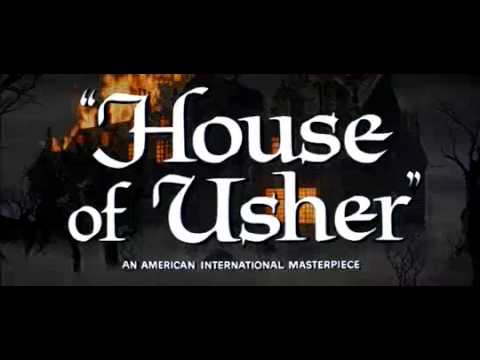
Poe's literary work can be seen on screen in various forms. In film, the best-known work is that of the duo Roger Corman and Vincent Price in films such as House of Usher (1960), The Pit and the Pendulum (1961), The Raven (1963), The Masque of the Red Death (1964), and The Tomb of Ligeia (1965). Jan Švankmajer, the Czech master of animation, has, among several films, Lunacy (2005), a feature film also influenced by the writing of the Marquis de Sade, which is somewhat reminiscent of La mansión de la locura (1973), a film directed by Juan López Moctezuma, since both are based, in part, on the story The System of Doctor Tarr and Professor Fether. Personally, I believe that the animated film adaptation of Batman: Year Zero (2011) contains a direct allusion to the poem The Raven — in general, the Batman universe is full of references to Gothic literature.
On the small screen, The Simpsons deliver a masterful adaptation of The Raven in the Halloween special of the second season, narrated by the voice of James Earl Jones. For the series Masters of Horror, Stuart Gordon directs the episode “The Black Cat” (2007) in the second season. The first season of the series The Following is based on a killer whose inspiration comes from Poe's literary works.
It has been two hundred and eight years since his birth, and his creative and artistic lineage continues to bear fruit in countless narrative forms. Poe's legacy is alchemy: the primordial substance transformed into the elemental, into the eternal. Long live horror and its mentors.
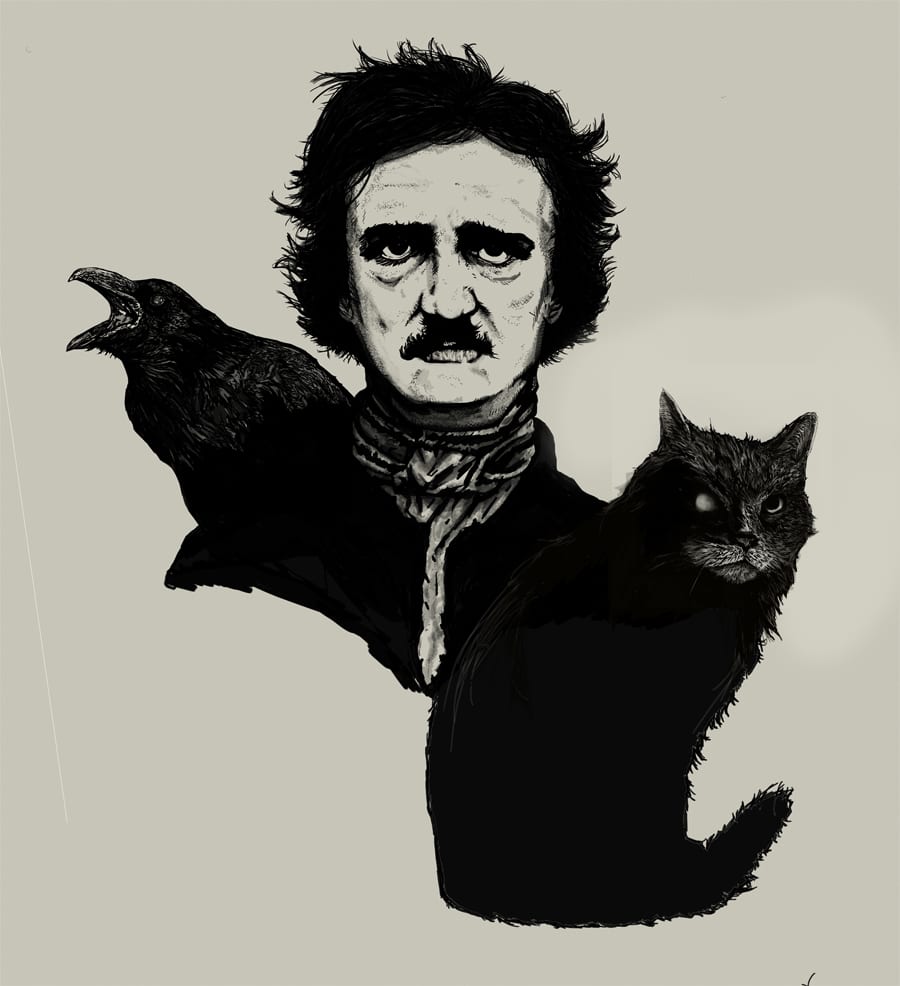
To the master of somber flight and dark fur.