10 OCT 2016
#MacabroGamers: Horror in Pixels: Fear in the Atari Era.
Macabro launches a new column: #MacabroGamers. Every two weeks, starting this Monday, expect stories and recommendations from Mario Ayanami about the best horror has to offer in video games.
By: Mario Ayanami.
In the late 1970s, an industry was establishing itself as one of the great pillars of entertainment: video games. Just as had happened with film, one of the first genres to be explored was horror. Given that most games were only rough approximations of what they were meant to represent, how could such a complex sensation as fear be translated into this new technology? Here are the first four attempts to bring it to the most popular system of that decade: the Atari 2600. Let's take a look at this macabre journey… of blocks and beep-boops.
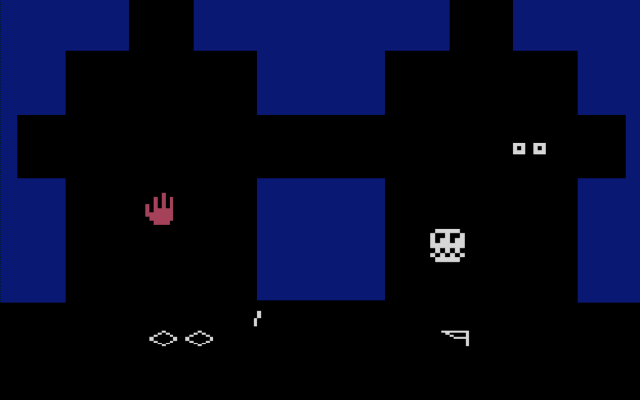
In 1982, Atari would release the game considered the first survival horror in history: Haunted House. Although rudimentary in its graphics, its premise was simple: you had to make your way through a house shrouded in total darkness, dodging bats, ghosts, and giant tarantulas to recover an urn. If you managed to escape with the object, you won the game. In later levels, the difficulty increased so much that you could no longer even see the walls of the place unless you lit a match. By the end, all you could see on screen was the silhouette of your own eyes…
However, nothing was quite as innocent as it might seem. In 1982, Wizard Video, the video distributor known for B-movie classics, entered the electronic games market with The Texas Chainsaw Massacre, inspired by the film directed by Tobe Hooper. The controversial title put you in control of Leatherface, the masked main antagonist, who had to chainsaw down every victim that crossed your path. The game ended once your weapon ran out of gas. For its time, violence in video games was almost unthinkable. Many retailers refused to sell the cartridge because they felt no child should be controlling a maniacal serial killer. Today, it fetches high prices among Atari collectors, as does another adaptation we would see the following year: Halloween.
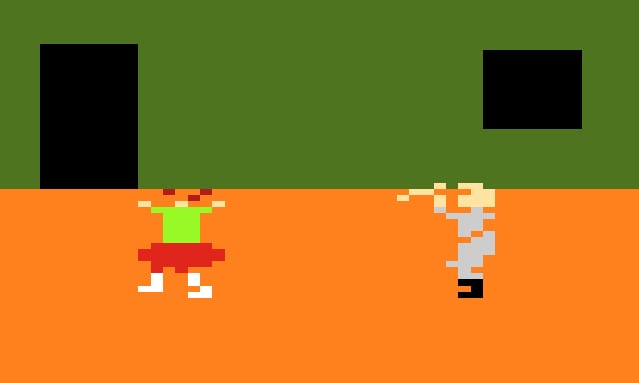
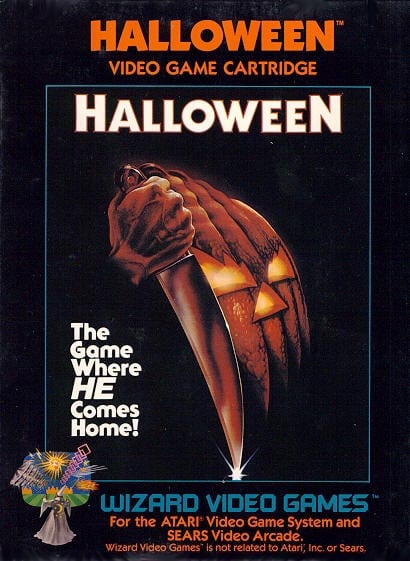
Although its cover art, music, and the detail put into Michael Myers are similar to what's seen in the film, it isn't based on either movie. The mission was simple: you play a babysitter who must rescue children from a house (with dozens of identical rooms, by the way) that has a rather unwelcome guest. Whenever you failed a rescue, Myers would mercilessly slaughter his victim. That image of a headless body still running back and forth like a chicken remains a deeply unpleasant sight. However, it suffered the same fate as The Texas Chainsaw Massacre: the game was banned in several stores for skewing toward an adult audience.
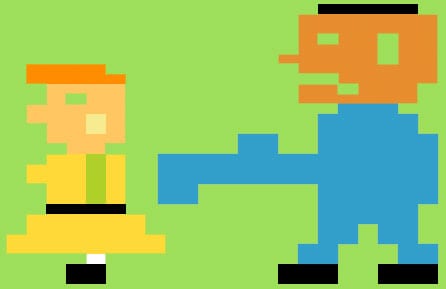
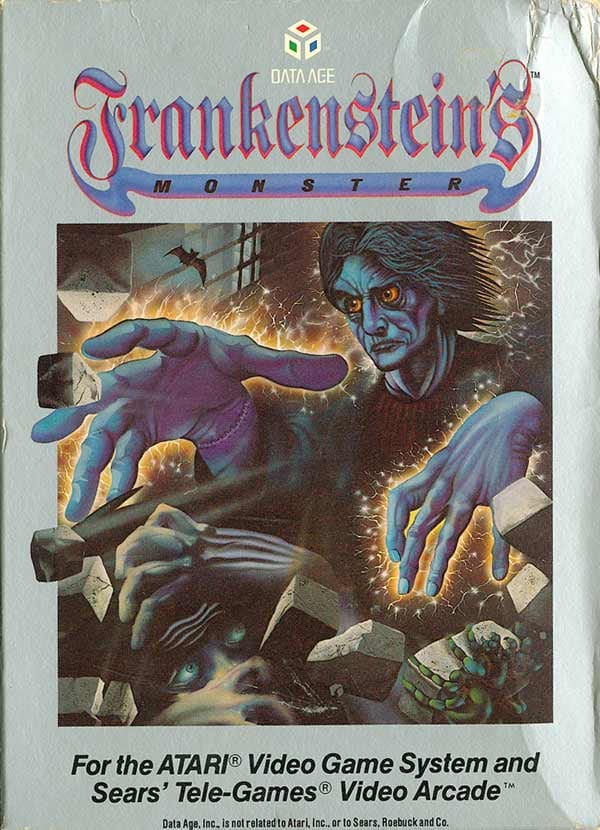
The developer that pushed the console to its full potential in 1983 was Data Age, with their release of Frankenstein's Monster, based on the famous work by Mary Shelley — and in doing so, the developers made clear they had read the novel, since they knew the difference between the Monster and Frankenstein himself. The objective was to control a character who had to reach the doctor's castle to stop him from completing his final creation. To do this, you had to carry blocks to build a wall and trap the creature. Up to two players could even try their luck in cooperative mode and put an end to the looming threat. Despite its gameplay practically inspired by Pitfall!, it proved to be quite ambitious in creating shading on the surface of its platforms and characters.
Many people tend to underestimate or dismiss the system's capabilities. Having to use your imagination for much of what's happening fuels a certain sense of immersion that has been gradually lost. In the case of Haunted House, you're not even aware of the space around you; everything has to be recreated in your mind. It's an unmatched charm you have to experience… there's nothing like being caught in the uncertainty of not knowing what to do, don't you think?