3 OCT 2017
#MacabroTurístico: TZOMPANTLI MÉXICO TENOCHITITLÁN.
By Casandra Vicario
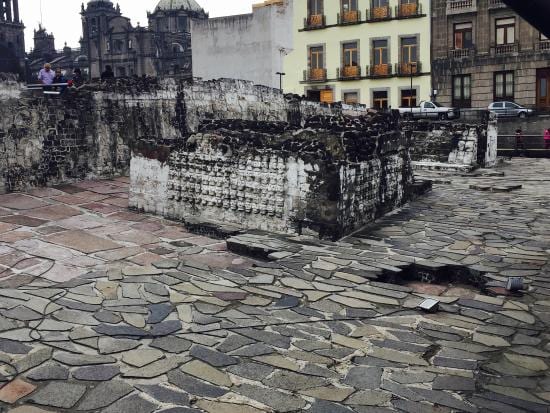
A few days ago, a discovery related to the culture of death in our country was announced: on Guatemala Street, in the Historic Center of Mexico City, a circular structure nearly 34 meters long, made of skulls, was found — what is known as a Tzompantli.
To give a bit of history, a Tzompantli was an altar where the heads of those who had been sacrificed were placed on public display to honor the gods. The word comes from the Nahuatl "tzontli," meaning head or skull, and "pantli," meaning row or line, so Tzompantli means "row of skulls."
According to archaeologists Eduardo Matos Moctezuma, Pedro Francisco Sánchez Nava, and Raúl Barrera, most of the skulls belonged to young men, though some belonging to women and even children have also been found. So far, 35 sets of remains have been found, but specialists believe hundreds more may still be discovered.
An offering made of a type of white marble known as "white travertine" was also discovered. According to the archaeologists, in the early twentieth century Leopoldo Batres had found structures, altars, and walls on this very Guatemala Street.
In 1914, Manuel Gamio also carried out excavations in the area, finding very similar remains, and with the construction work on the Metro, parts of these walls resurfaced once again — leading archaeologists to conclude that this is the great Tzompantli of México-Tenochtitlan.
And why are we telling you all this? Well, because very close by, at Guatemala No. 34, stands the Museo Archivo de la Fotografía, another of the venues from the last Macabro 16 — as you can see, our festival isn't just concerned with you having a nice time looking at the dead, but with you being very close to them.
Image: Tripadvisor.com