15 JUN 2021
Some vampiric figures in Asian folklore.
By: Casandra Vicario
As we head into Macabro 20, dedicated to vampires, we invite you to discover some vampiric figures from the Asian continent. Ready?
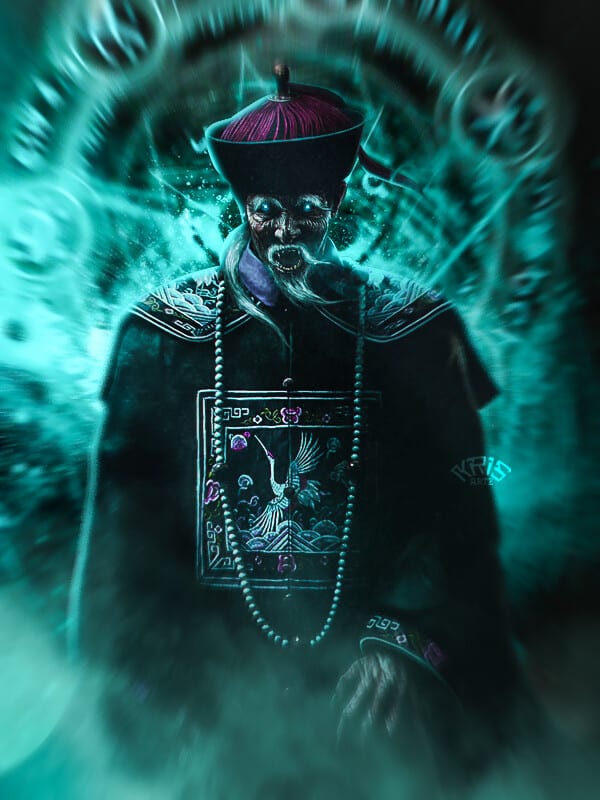
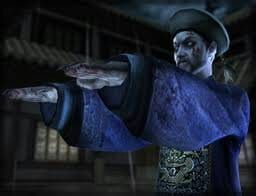
In China, vampires are known as “jiang shi” and they don't feed on blood, but on life energy; they generally appear when an unjust death occurs, a suicide, or when the soul becomes trapped in the body of a deceased person.
The “jiang shi” can have a variable appearance: some have very pale skin with greenish tints, while others can appear as corpses in an advanced state of decomposition.
To avoid them, the most common method is to scatter handfuls of rice so that the “jiang shi” stop to count the grains, giving us time to reach a safe place and get away from danger.
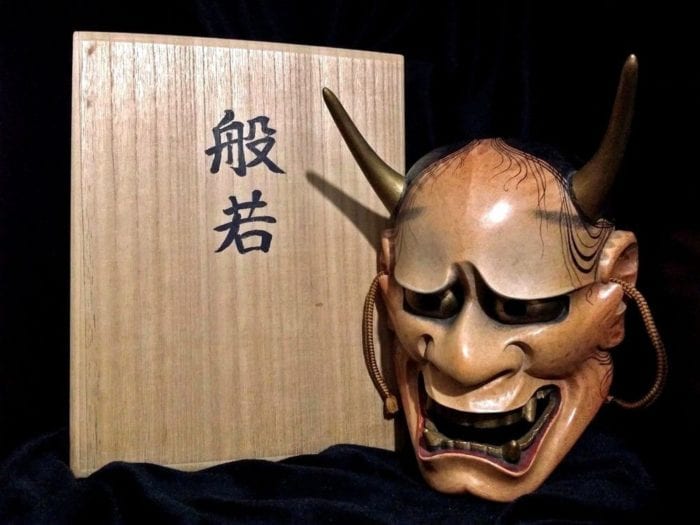
Now let's talk about hannya, a male vampire who is drawn to beautiful women, whom he paralyzes using a secret weapon: a bone-chilling scream.
This vampire lives in the sewers and attacks every 4 or 5 years, which makes it very hard to track down (it reminds me of a certain movie clown who also lives in the sewers and shows up every 27 years); to drive this creature away, a special Buddhist prayer must be recited.
There is another version of hannya that is female, although it is actually a female demon consumed by jealousy. Legend has it that in life she was a beautiful woman who went mad and was possessed by demons.
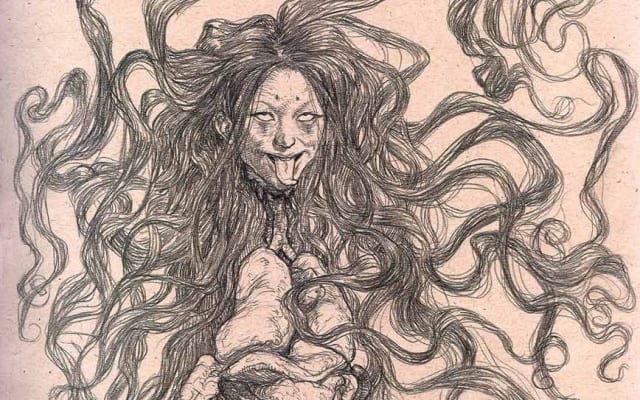
Now let's talk about the “penanggalan”, a Malay female vampire that arises when a woman was the victim of a curse or practiced black magic in life. Physically, this monster is quite striking: it consists of a head, spine, and intestines, and its diet consists of pregnant women and babies.
To get its food, “penanggalan” slips through cracks or through the floorboards of houses.
It is said to have been a woman who died in childbirth and returned to torment children. As a curious fact, the writer Seaburry Quinn wrote a story featuring this monster as the protagonist, titled “The Malay Horror” and it was published in the iconic magazine “Weird Tales” in 1933.
In the Philippines, there is the manananggal, which stalks people at night and feeds on fetuses. What makes her such a terrifying vampire is her ability to split her body in half and fly using only its upper half, which makes her lighter and allows her to take flight and hunt with ease.
If you encounter her, be sure to always carry a bit of vinegar, salt, garlic, or a few sharp daggers to ward her off.
Now let's talk about “kasha”, a Japanese vampire shaped like a cat that poses no threat to the living, since it feeds on corpses in the cemetery or on bodies awaiting cremation. To keep “kasha” from feeding on the deceased, a night watchman is hired to make loud noises throughout the night to keep it away from its food source.
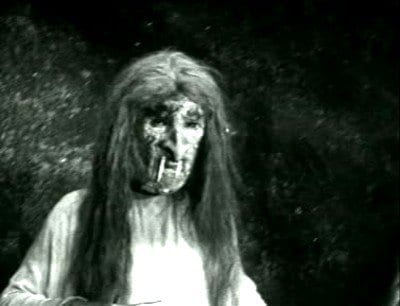
Finally, let's talk about the “pontianak” a recurring vampire in many Singaporean films. This being represents the spirit of a woman who died during pregnancy and kills its victims by digging into their stomachs with its sharp nails.
How can a “Pontianak” find people to devour? By tracking the scent of the clothing of those who dry their garments outside their homes… if it likes your scent, it will find you.
Another type of pontianak is known as “mati-anak” and is a stillborn baby that turns into a vampire. Popular tradition says that to prevent this from happening, the following must be done:
Take the deceased baby's body and place a chicken egg under each armpit, drive a needle into each palm of its hands, fill its mouth with glass beads, and also say a prayer so that it finds eternal rest.
There is a trilogy of Singaporean films in which “pontianak” is the protagonist: “Pontianak” released on April 27, 1957, with such success that it ran in theaters for more than three months and spawned two sequels, “La venganza de los Pontianak”, also from 1957, and “Maldición de Pontianak” in 1958. This trilogy was directed by Balakrishna Narayana Rao, better known as B.N. Rao, and starred María Menado and M. Amin.
Sources:
www.pasarmiedo.com/monstruos/vampiros/224-vampiros-de-asia (abre en nueva pestaña)
Matthew Bunson. The Vampire Encyclopedia. 2000. New York.
Images taken from the Internet