21 DEC 2019
Krampus and the Pagan Origin of Christmas
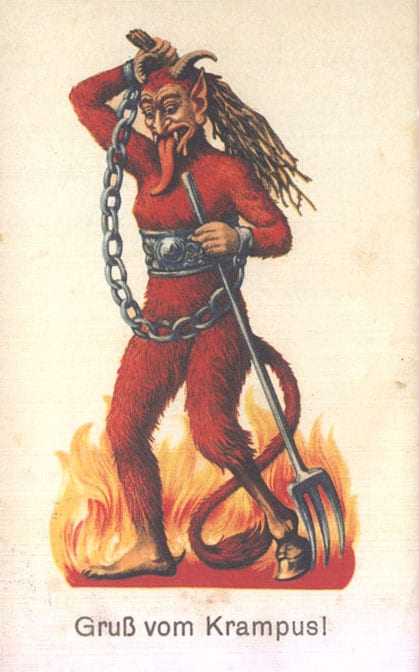
Saint Nicholas was a European saint who brought gifts to well-behaved children every December 6. Krampus is his sinister companion. The kind saint left the punishment of misbehaving children to his counterpart, known by different names throughout the continent: Knecht Ruprecht, Certa, Perchten, Black Peter, Schmutzli, Pelznickel, Klaubauf, and Krampus, who is usually depicted as a classic demon with horns and a long, monstrous tongue, but who has also been seen dressed in black like a sinister knight, or as a hairy man. Krampus punishes naughty children by crushing and chaining them before carrying them off in baskets.
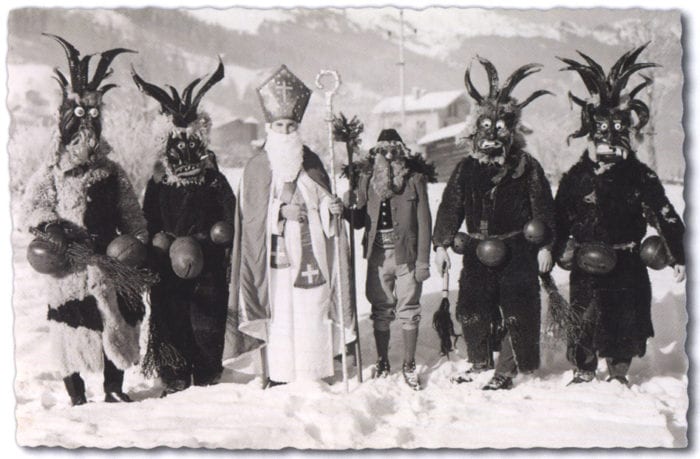
Krampus is celebrated on “Krampus Night,” or Krampusnacht, which takes place the day before St. Nicholas Day. In Austria, northern Italy, and other parts of Europe, party attendees dress up as devils, wild men, and witches to take part in the Krampus run, in which they race through the streets in capes, carrying torches and terrorizing children and adults alike. Over time, Krampusnacht has become popular in other European countries such as Finland and France, as well as in some cities in the United States.
It has its origins in the European tradition of masquerades during the winter solstice season, a practice that dates back thousands of years. Villagers across the continent would dress up as wild animals and mythological figures to hold parades and comedic performances. The tradition of wearing masks continues to this day as one of the main sources of the modern Halloween, with its costumes, trick-or-treating, and pagan symbolism. The most common figures in these folk rituals are the Old Man Winter and the Billy Goat — archetypal predecessors of St. Nicholas/Santa Claus and the Devil, that is, Krampus.
In the 18th century, the American St. Nicholas emerged in New York in the figure of Santa Claus. Also based on the Dutch St. Nicholas, Santa incorporated elements of the pagan winter solstice customs. He swapped his white robe for a red suit, his horse for a sleigh pulled by reindeer, and moved his feast day to the night before Christmas.
Santa also took on his companion's job of punishing those who misbehave, but the New World temperament didn't put much stock in that task, and children were never afraid of him. However, the 21st century has brought Krampus back, who has arrived on this earth to punish spoiled and disobedient children.
The hunger for a darker Christmas celebration has turned the sinister Santa Claus into a pop culture figure, seen in films like Rare Exports, books like Santa's Twin, and the revival of Saturnalia rituals, as well as the evident animistic practices during the season.
Source and images: krampus.com (abre en nueva pestaña) / Translation by Macabro