28 FEB 2018
#LetrasMacabras: 8 by Stephen King | Part 2 of 3
By: Casandra Vicario.
We continue this tribute to the great Stephen King. In the previous installment, we included some biographical notes to help understand a bit of the context of his books, which have become not only major bestsellers, but also excellent adaptations for the big screen. In this second installment, Casandra Vicario recommends four novels that have delighted his fans:
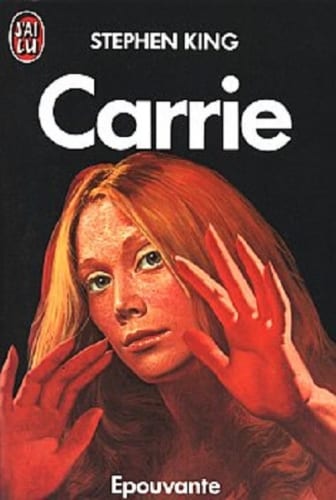
CARRIE. 1974.
Carrie is the first published novel by American writer Stephen King, published in 1974. It is one of the most censored books in U.S. schools, and the film was even banned in Finland. Most of the book is written in an epistolary structure made up of news clippings, letters, book excerpts, etc.
Carrie White's life is not like that of any other girl her age: she has a religious fanatic mother who forbids her from having friends and wearing fashionable clothes, and on top of that, Carrie has telekinesis, meaning she can move objects at will with the power of her mind.
Here is an excerpt from Carrie, by Stephen King, to inspire you to read it:
"The screams, the echoes, and the muffled sound of shower water splashing against the tiles filled the locker room. The girls had been playing volleyball during first period, and there was something urgent about their light morning sweat. They stretched and writhed under the hot water, shrieking, splashing water around, and passing the bars of white soap from hand to hand. Carrie stood among them, impassive, a frog among swans."
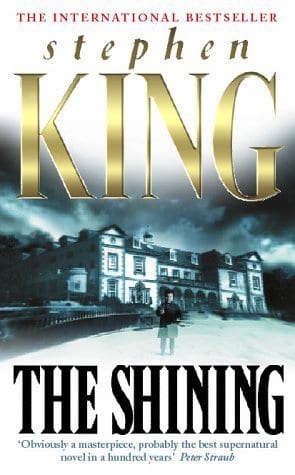
THE SHINING. 1977.
The Shining is the third horror novel by American writer Stephen King, published in 1977. The title was inspired by John Lennon's song "Instant Karma!". It was his first hardcover bestseller, which established him as a major writer in the horror genre. Several parts of the text allude to the "red death," undoubtedly a reference to the story by Edgar Allan Poe.
Jack Torrance, his wife Wendy, and their young son Danny move into the Overlook Hotel, where Jack has been hired to look after the place during the harsh winter. Cut off from civilization for months, Jack hopes to battle alcoholism and uncontrollable rage while writing a play, but supernatural forces also dwell in the hotel, which somewhat changes the protagonists' plans.
"Somewhere, in some Sunday supplement or magazine article, Jack had read that seven percent of car accidents go unexplained. No mechanical failure, no speeding, no alcohol, no bad weather. Simply a car that crashes somewhere on a deserted stretch of road, and the only occupant, the driver, dies, unable to explain what happened to him. The article included an interview with a police officer who believed that many of those unexplained crashes were caused by insects in the car. Wasps, a bee, maybe a spider or a moth. The driver gets scared and tries to swat the insect or roll down a window to let it out.
Maybe the insect stings him; or the driver simply loses control. Either way... bang, and that's it. And the insect, usually unharmed, buzzes off happily from the smoking wreckage in search of greener pastures."
MISERY. 1987.
Paul Sheldon is a highly successful writer. One winter afternoon, while driving on the highway, he suffers a terrible accident that he miraculously survives, though with both legs broken and badly injured. He wakes up in the home of Annie Wilkes, a nurse obsessed with Misery, a character from many of Paul's novels. At first everything seems to be going well, but little by little Paul discovers the obsession taking hold of his admirer, a psychotic murderer who will try to keep him captive for as long as possible, cutting him off from the outside world and forcing him to write a new novel in which Misery is brought back to life — since, tired of the character, the writer had decided to kill her off in his previous novel.
As an interesting note, in 2011 Misery was adapted for the stage in Mexico, performed by Itatí Cantoral and Damián Alcazar under the direction of Antonio Castro. In the film version, Cathy Bates won an Oscar for her portrayal of Annie Wilkes.
Excerpt from Misery, by Stephen King:
"—I don't want her spirit!—she screamed, twisting her fingers like claws and shaking them at her own face as if she wanted to tear it from her eyes. I want her! You killed her!
—I didn't kill her!
—Of course you didn't—she said with bitter sarcasm—. And if it wasn't Paul Sheldon, then who was it?
—Nobody—he answered softly—. She simply died."
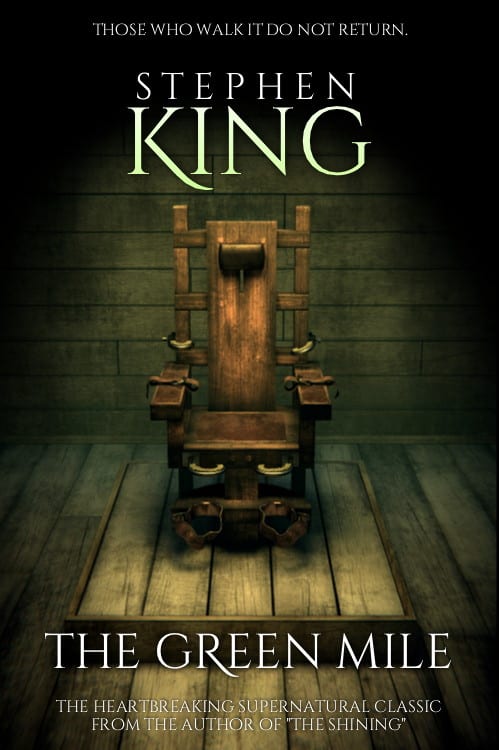
“THE GREEN MILE (also released in Spanish as El pasillo de la muerte)."
The film tells the story of Paul Edgecomb, who, now a 108-year-old man, recounts his time as an officer on "death row" at Cold Mountain Penitentiary in the state of Louisiana during the 1930s. Among Edgecomb's prisoners is a character with supernatural powers who is able to heal people and perform other paranormal acts.
"It all happened in 1932, when the State Penitentiary was still at Cold Mountain. The electric chair was there too, of course.
The inmates made jokes about the chair — people always joke about the things that scare them but that they can't control. They called it the Fryer or the Big Blender. They joked about the electric bill, or about the possibility that Mayor Moores might cook Thanksgiving dinner in it, since his wife Melinda was too sick to cook.
But those who were destined to sit in that chair found nothing funny about the situation".