16 FEB 2021
#Dracula90: 90 Years of the Spanish-Language Version of "Dracula".
“Listen to them, children of the night, what music they make.” 90 years since the Spanish-language version of Dracula.
Casandra Vicario
In 1931, at night, the set for filming “Dracula” never rested — at 6 p.m. a new crew of actors and actresses would arrive, and a Spanish-language version of this vampire classic was filmed, one that many consider superior to the one starring Bela Lugosi.
That year, sound film was still new to the world; while being able to see and hear movies in their original language was appealing, the diversity of languages was a problem, and Universal earned half its revenue from the foreign market.
Although films with sound were the future, they also posed a threat to the market — subtitles didn't exist yet, let alone dubbing — so the studio followed other companies' example and began producing foreign-language versions of some of its films simultaneously.
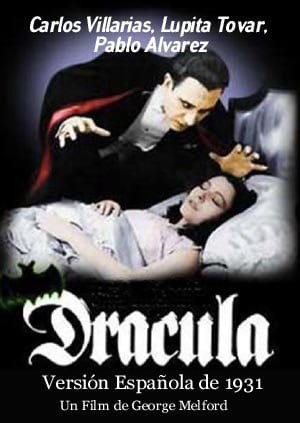
Such was the case with “Dracula”, whose Spanish-language version was overseen by producer Paul Khoner of Universal Films, with direction going to George Melford, and the screenplay by Baltasar Fernández Cué, and the role of Count Dracula went to Carlos Villarías, Barry Norton (whose real name was Alfredo Birabén) played Juan Harker, Pablo Álvarez Rubio played Renfield, Eduardo Arozamena as Van Helsing, José Soriano Viasca as Dr. Seward, Carmen Guerrero as Lucía, and Mexican actress Lupita Tovar as “Eva.”
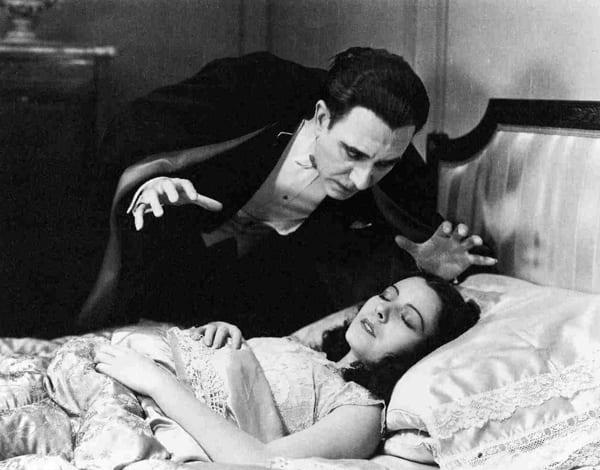
The Spanish-language version of “Dracula”, follows the original shooting script much more faithfully than Browning's film. Filming began on October 10, 1930; they would start at 8:00 p.m. and pause for dinner at midnight.
The only person allowed access to the footage shot by the American crew was Carlos Villarías, who was in charge of playing Dracula and whose job was to imitate the vampire played by Bela Lugosi — the rest of the cast had to develop their own characters.
The English-language version of “Dracula” was shot in 7 weeks, while the Spanish-language version wrapped filming in 22 nights, finishing on November 8, 1930. In early January 1931, a special screening was held for Universal executives and members of the press, and it premiered in the United States on March 20.
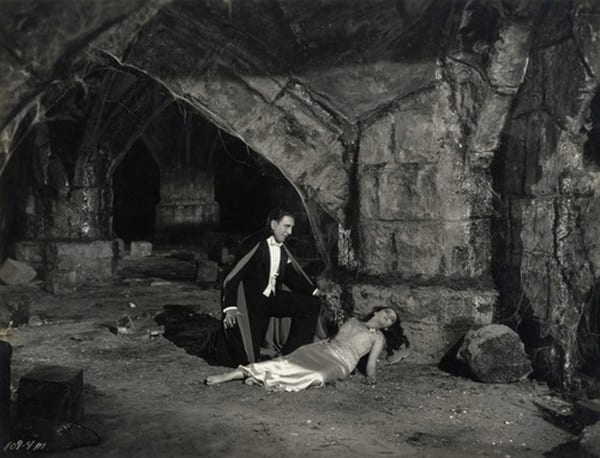
David J. Skal, in his book “Hollywood Gótico. La enmarañada historia de Drácula” shares that this Spanish-language version of “Dracula” reached Mexican theaters on April 4 and did very well at the box office, staying in theaters until the end of the month. The press praised the work of Carlos Villarías and, of course, Mexican actress Lupita Tovar.
The “Dracula” Spanish-language film was one of the last foreign-language films produced in Hollywood; the practice was discontinued mainly for economic reasons and because countries began producing their own films.
But the story of this film doesn't end there — in 1977, Universal wanted to put together a retrospective of its work and discovered that its copy of “Dracula” by George Melford was damaged.
They then turned to the Library of Congress in the United States, but that copy was also in poor condition and from the same reel. A call went out to film archives around the world to find out whether a complete copy of the film existed, and Cuba stepped forward — thanks to that, we've been able to enjoy it for generations.
Some fun facts about this film:
George Melford didn't speak Spanish, so he gave instructions with the help of interpreter Enrique Tovar Ávalos.
Carlos Villarías's name appears in the opening credits as “Carlos Villar.”
The restored copy of the Spanish-language version of “Dracula” was presented at the Directors Guild of America theater in Los Angeles on November 10, 1992, the same day as the premiere of “Bram Stoker's Dracula,” directed by Francis Ford Coppola.
Although the English-language version was subject to censorship, the Spanish-language version had more freedom — the women's costumes were sheer and revealing for the time. Lupita Tovar recalled, “My nightgown was very low-cut. When my grandson saw the movie, he told me, ‘Now I know why grandpa married you!’”
Incidentally, Lupita Tovar married Paul Khoner a year after the premiere of the Spanish-language version of Dracula, and they stayed together until the producer's death in 1988 at age 85. Of the rest of the cast, the Mexican actress was the last to pass away, in 2016 at age 106.
Let's celebrate 90 years of this Spanish-language version of a classic — if you haven't had the chance to enjoy it yet, now is a good time. It's a gem.
Bibliography consulted:
https://www.imdb.com/title/tt0021815/ (abre en nueva pestaña)
Hollywood Gótico. La enmarañada historia de Drácula. David J Skal. Pop ediciones. Madrid. 2015.