12 FEB 2021
#Drácula90: 90 Years Since the Premiere of "Dracula" in 1931
“Watch him, a son of the night, what great films he will star in.” 90 years since the premiere of “Dracula” in 1931. By: Casandra Vicario
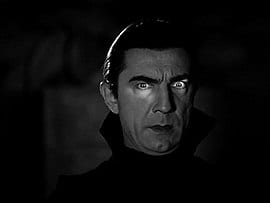
On February 12, 1931, New York’s Roxy Theater premiered the film “Dracula”, with Hungarian actor Bela Lugosi in the starring role, and horror cinema was changed forever. Today marks 90 years since that event, and we’re writing a little about it here.
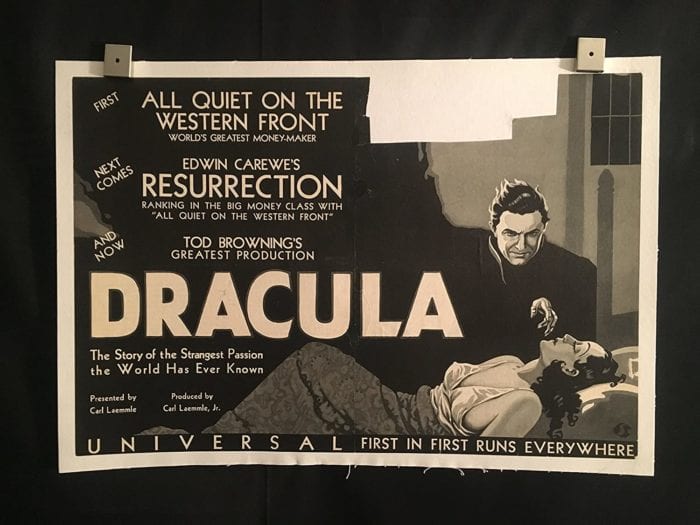
What was happening in the United States in 1931? The famous building known as the Empire State Building opened in New York City. It was an important year for the mafia: Al Capone would be sentenced to 11 years in prison for tax evasion, and on September 10, Salvatore Maranzano was assassinated, giving rise to five major mafia families: Bonanno, Colombo, Gambino, Genovese, and Lucchese.
In film, a week before the premiere of “Dracula”, “City Lights,” starring Charles Chaplin, hit the big screen, and so did Fritz Lang’s “M.”
Although the film version of “Dracula” directed by Tod Browning, was not a faithful copy of Bram Stoker’s novel but rather based on a stage adaptation by Hamilton Deane, there are a couple of earlier films worth mentioning: in 1921, Hungarian director Karoly Lajthay made a version called “Drakula,” a film now lost, and of course, we can’t forget F.W. Murnau’s “Nosferatu,” whose director, incidentally, died on March 11, 1931.
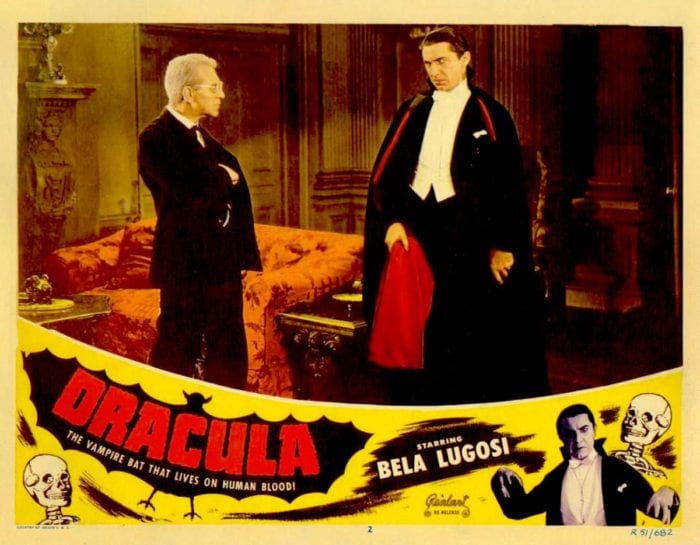
The story of how filming began on “Dracula” is interesting: Tod Browning and the magnificent actor Lon Chaney had just finished filming “London After Midnight” (1927), so it was logical to assume that Chaney would be the one to play the count. However, the “man of a thousand faces” died of throat cancer on August 26, 1930, before filming began, so Bela Lugosi, who had played the count in Hamilton Deane’s stage play, did everything he could to land the role—legend has it he even took a pay cut to $500 a week to make himself Universal Films’ best option.
Even though the studio cut 15 minutes of footage from the film for being too daring for the time, “Dracula”, it became a huge box-office hit—it was the film that earned Universal Films the most money that year, 1931—kicking off a golden age of horror cinema now known as the “classic monsters” era, that same year, “Frankenstein” also premiered, directed by James Whale and starring another great, Boris Karloff.
As for some fun facts about “Dracula” we can highlight the following:
1.- In this film, the vampire never blinks.
2.- The famous line “Listen to them, the children of the night, what music they make” in which the count refers to the howling of wolves, was voted number 83 on the American Film Institute’s “100 Movie Quotes” list.
3.- While the filming of “Dracula” took place during the day, a Spanish-language version of the same story was filmed at night, using the same sets and costumes; it was directed by George Melford, with Mexican Enrique Tovar Ávalos serving as the director’s interpreter for the crew, the role of the count went to Carlos Villarías, and Lupita Tovar, an actress from the golden age of Mexican cinema, played Eva.
To wrap up these lines, the version of “Dracula” by Universal Films would contribute major elements that are now classic to the image of the aristocratic vampire: hypnotic powers, the ability to turn into a bat, and the use of a red-and-black cape.
“Watch him, a son of the night, what great films he will star in.” A gory 90th anniversary, dear Count Dracula—immortality is still yours.
Sources:
https://www.imdb.com/title/tt0021814/ (abre en nueva pestaña)
El Cine fantástico y de Terror de la Universal. Juan Antonio Molina Foix, compiler. Editorial Donostia Kultura. Spain. 2000.
Diccionario Ilustrado del Cine de Terror. Miguel and Javier Juan Payán. Ed. Ohara Pub. Spain. 2006.
Grandes Monstruos del Cine. Miguel Juan Payán and Javier Juan Payán. Ed. Ohara Pub. Spain. 2006.