
15 MAY 2017
#LetrasMacabras From Gothic to Horror: Horace Walpole, Ann Radcliffe, and Matthew G. Lewis
By: Diego Vilchis (@silens_aeternum)
One of the themes that arises when pinpointing a concrete origin of horror as a literary genre is that of the threshold where it crosses paths with the fantastic. It's possible that more than once one might be suggested as lying within the other. While this exploration intertwines with mythology and certain religious precepts — concerning the unknown and morality as the engine of fear —, in strictly literary terms we find these projections at the end of the 18th century, in one of the stages that marked the break with the imposition of the rational: the beginnings of Romanticism, the foundations that established it as the favored movement of a lyrical and ideological lineage that flourished through the words of Byron, Shelley, and Keats, of Victor Hugo, of Goethe and Schiller, and, at its height, of Bécquer; it could be heard through Beethoven, Schubert, Chopin, and Paganini; it was adorned by the strokes of Delacroix and the shadows of Goya.
Within the framework of pre-Romanticism, some of the movement's most characteristic aspects were established: the need to look to the past, to identify with folklore — which stands as an origin of nationalism —, and consequently, to rescue it; this projection of nostalgia and social and artistic isolation fell upon Gothic architecture, whose aesthetic reputation had been scorned: “Gothic” was a derogatory term used during the 14th century to describe the buildings built by the Goths (gotisch). Its aesthetic — those churches with prominent stained-glass windows and pointed structures — became a refuge for the pre-Romantic imagination, where the fascination with night and the occult took hold.
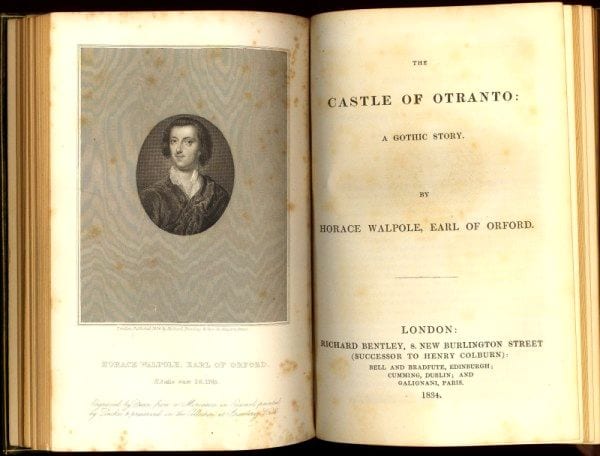
It was under these circumstances that, in England in 1764, there appeared The Castle of Otranto, by Horace Walpole, which established the parameters of the Gothic novel, as well as of the fantastic genre. Walpole had written in a letter: “In the heretical corner of my heart, I worship the Gothic.” That somber predilection is detailed in his story: amid a family drama involving a murder, a giant helmet appears in the middle of the castle courtyard, whose owner will surely appear by the end. Mysterious sounds echoing through vast underground corridors, doors opening, paintings that seem to move, among other things, are elements the author introduces that remain hallmarks of Gothic stories. Although somber aspects appear in the novel, Walpole's exercise rests more on placing his characters in situations where the fantastic predominates.
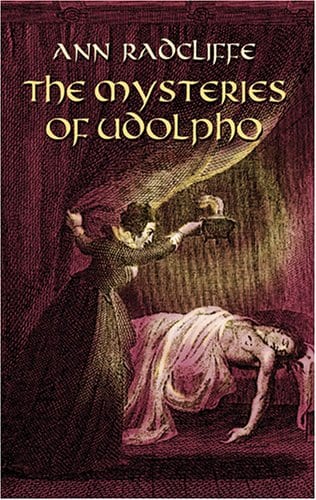
The influence of Otranto would perhaps not be felt until thirty years later, when there appeared The Mysteries of Udolpho, published in 1794 by the pen of Ann Radcliffe. In the story, after her father's death, Emily is forced to live in the castle of Udolpho under the guardianship of her aunt and her aunt's husband, Signor Montoni. Of the novels in the genre, this one is perhaps the quintessential example of relying on suspense, for which it builds an atmosphere based on events that at first seem supernatural, but to which Radcliffe — perhaps the most skeptical of her peers — gives a rational explanation.
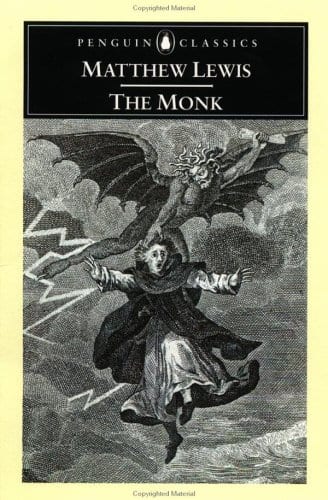
It did not take long for what is probably the darkest jewel of the Gothic to emerge: in 1796, there appeared The Monk, by Matthew Gregory Lewis. Fascinated by the English writer's novel, Lewis tells the story of Father Ambrosio, a man of impeccable virtue who, after falling in love with the young Antonia, finds himself tempted by the devil. The secluded setting of an abbey gave rise to several features that make it essential reading, and which at the time could well have caused an uproar: Ambrosio and the sexual relations he maintains with Matilda, who turns out to be part of a demonic allegory; an act of necromancy in the abbey's cemetery; the story's resolution, whose vision of punishment is harrowing. Also woven into its pages is a splendid ghost story. In this way, Lewis's approach through Gothic literary aesthetics gave horror in literature its first breath of life.
While the Gothic still survived with Melmoth the Wanderer (1815) by Charles Maturin, the novel's decline arrived. But, as if in an alchemical process, the stone had transmuted into gold. The somber-looking shell had cracked: within that darkness, horror had been born.