29 JUN 2017
#MacabroGamers Tearing the veil of reality: deconstructing The Last Door
By: Diego Vilichis (@silens_aternum)
Jeremiah Devitt receives a letter from his old friend, Anthony Beechworth. “Videte ne quis sciat” is what the mysterious paper declares, and he soon realizes that his old schoolmate is in danger, so he decides to embark on a search for him. The situation leads Devitt to recall dark events from his past and his connection to something sinister lying hidden among memories. Something that seems to have already awakened.
This is the premise behind The last door, a horror video game developed by The Game Kitchen starting in 2013 through a Kickstarter campaign. Released for both mobile platforms and PC, it is an independent title whose support is centered on the story, which is narratively influenced by the work of Edgar Allan Poe and H.P. Lovecraft, and whose format is episodic, like a television series, spanning two seasons, each with four episodes and additional material.
This is not the first time that the literary universe of horror masters has made its way to video game consoles. We might think of Call of Cthulhu: Dark corners of Earth (2005), or perhaps Alone in the dark (1992) – to mention just a few –; however, The last door offers an original take that draws, above all, on narrative rather than literal elements of ‘Lovecraftian’ literature, building a story steeped in atmosphere and mystery.
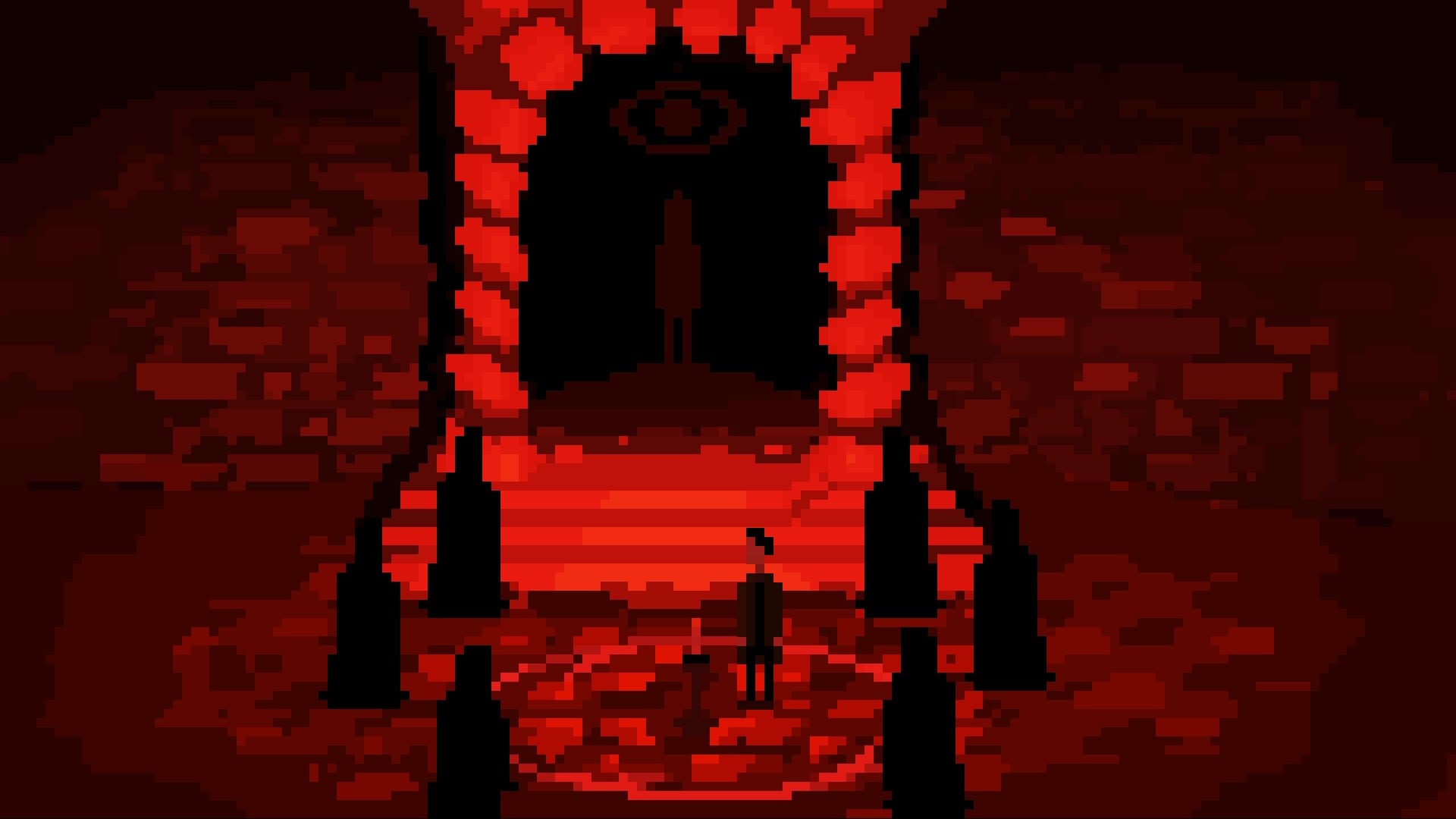
Set in Victorian England, the player learns the facts through Jeremiah Devitt and John Wakefield, his psychologist, who are at the center of the apparent disappearance of Anthony Beechworth and what lies beyond it. The gameplay mode, point and click, is simple, as are the 2D graphics with their pixelated design – we could say its aesthetic is retro –. In other words, the gameplay isn't complicated; on the contrary, it strengthens the suspense that builds throughout the game.
It's important to consider that, alongside big companies and their multiple projects in development with enviable budgets, there are independent campaigns whose proposals manage to reach and sustain an alternative video game market. Through Kickstarter, the creators of The last door publicly invited contributions and cooperation for the video game – through donations or by helping, for example, with programming, subtitling, etc. –, premiering in March 2013 with the release of the first episode.
Considering the continuous advance of technology that strengthens gameplay and visual experience through high-definition graphics, The last door turns out to be a simple yet intriguing game, since its strongest bet rests on the story, making the pixel art and gameplay mode a seamless complement. Visually, it stands as a tribute to the earliest computer video games.
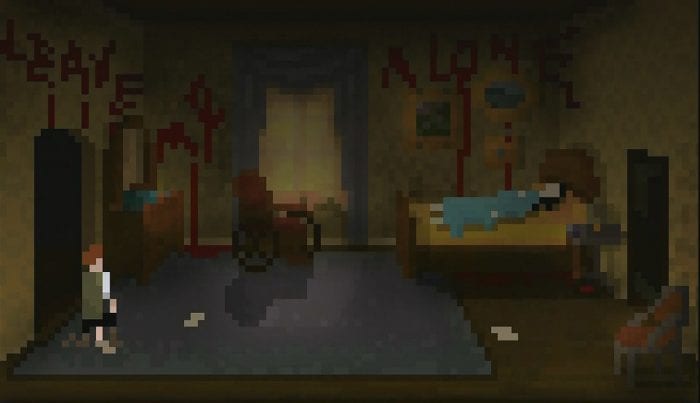
One of the strong points of The last door are the puzzles, whose difficulty level isn't complex, though that doesn't make them any less interesting, since they must be solved through exploration of the different settings, including interaction with certain characters or objects, which can sometimes catch the player by surprise.
But none of this is achieved on its own. As mentioned earlier, the story provides tremendous support and weight for the video game. Devitt's mission is surrounded by shadows that are revealed as his memory emerges from oblivion. Little by little, the images from his past take on a strange and sinister shape. With nods to tales such as The Premature Burial or The Black Cat, to certain narrative elements of the Mythos, or film genres such as folk horror, the player will gradually discover that behind Devitt's amnesia lie forgotten characters from his past and his connection to a latent horror that has begun to manifest, like an all-seeing eye. A horror that has called out to him.
With a masterful soundtrack composed by Carlos Viola, which blends with a sound design that builds suspense throughout the game, The last door represents a necessary visit for any good horror game. It's about giving independent projects the chance to show what they have to offer and deciding, chapter by chapter, whether they deserve our attention or not. This game deserves it, completely.
It's like opening a book and discovering that the shadows of psychological and supernatural horror persist and still wait to be set free.